


Southern Methodist University has shaped the intellectual, cultural, economic, and civic landscape of Dallas more profoundly than any other single private institution in the city's history — a university whose 1915 founding in the University Park neighborhood established the academic anchor around which one of Dallas's most prestigious residential corridors developed, and whose sustained growth into a comprehensive research university has created the research infrastructure, talent pipeline, and cultural programming that gives North Texas's largest metropolitan area a significant portion of its national academic credibility.
With an enrollment exceeding 12,000 students, a law school whose alumni populate the Texas judiciary and corporate legal community, the Cox School of Business whose graduates lead Dallas firms across virtually every industry sector, and the Meadows Museum whose Spanish art collection is considered the finest outside of Spain, SMU represents an institutional investment in Dallas's long-term intellectual and cultural capital whose effects touch virtually every dimension of the city's life.
For Dallas residents, Park Cities families, and anyone seeking to understand the institutional forces that have shaped one of America's most dynamic metropolitan economies, SMU's impact on Dallas provides a revealing and essential lens.
SMU's Founding and the University Park Development
Southern Methodist University was chartered in 1911 and opened its doors in 1915 on approximately 100 acres donated through private benefactors associated with Highland Park Methodist Church — including a significant contribution from the widow of Highland Park developer John Armstrong — giving the university the land holding whose University Park location would shape the development of one of Dallas's most prestigious residential corridors.
The university's founding under Methodist sponsorship gave it both the denominational identity and the independence from state funding that have shaped its institutional character across more than a century of development — an independence that has allowed SMU to pursue its own academic priorities and develop the selective admissions profile that distinguishes it from Texas's large public research universities.
The development of University Park and Highland Park around SMU's campus — the affluent residential communities whose tree-lined streets, prestigious addresses, and proximity to the campus create the Park Cities environment that consistently ranks among the most desirable residential areas in the Dallas metropolitan region — reflects the university's role as a neighborhood anchor whose presence shaped land use, property values, and community character across the surrounding blocks from the earliest decades of its operation.
The Southern Methodist University campus profile documents the university's enrollment, academic programs, and research scope — the statistical foundation for understanding SMU's scale and its sustained impact on the Dallas metropolitan economy and community.
The Cox School of Business and Dallas's Corporate Ecosystem
The Edwin L. Cox School of Business at SMU represents one of the most consequential institutional connections between the university and Dallas's corporate economy — a business school whose undergraduate, MBA, and executive education programs have produced the finance, accounting, marketing, and management professionals who staff Dallas's major corporations, entrepreneurial ventures, and professional services firms across generations of economic growth.
Cox's strong relationships with the Dallas business community — sustained through an active alumni network, corporate partnerships, and the executive education programs that bring working professionals onto campus — create the sustained feedback loop between academic training and professional practice that gives business schools their practical relevance in their home cities.
The school's particular strengths in finance, real estate, and entrepreneurship reflect the specific industries that have driven Dallas's economic growth across the decades since SMU's founding — the oil and gas industry that built the original Dallas fortunes, the real estate development sector whose projects have reshaped the metropolitan landscape, and the financial services industry whose concentration in Uptown Dallas and the downtown corridor has made the city one of the most significant financial centers in the American South.
The Federal Reserve Bank of Dallas maintains the economic data for the Dallas metropolitan area that contextualizes SMU's contribution to the region's workforce and business development landscape.
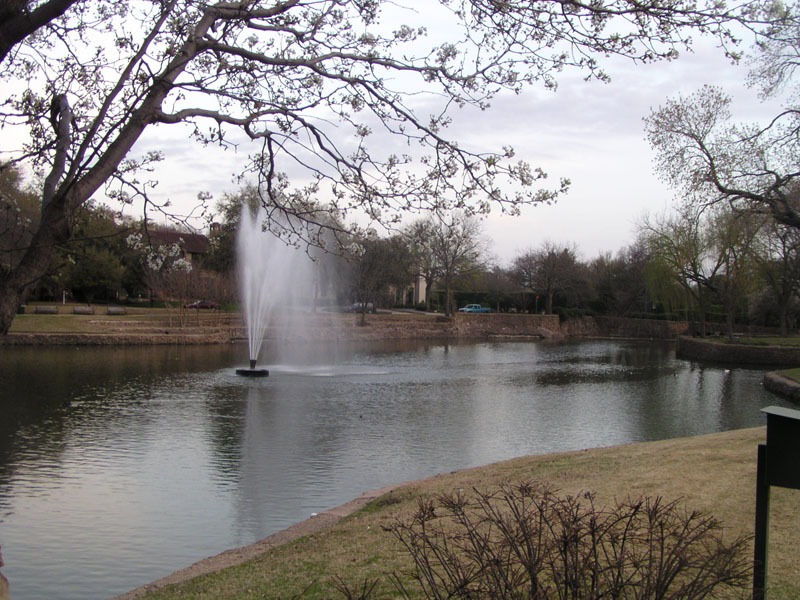
Image Credit: Drumguy8800,CC BY-SA 3.0, via Wikimedia Commons
The Meadows Museum and Dallas's Cultural Identity
The Meadows Museum on the SMU campus — established through the philanthropy of Algur H. Meadows and housing the largest and most comprehensive collection of Spanish art outside of Spain — represents SMU's most internationally recognized cultural contribution to Dallas's identity as a sophisticated arts destination.
The collection's breadth across Spanish art from the tenth century to the twentieth — including works by El Greco, Velázquez, Goya, Miró, and Picasso — gives Dallas a museum resource whose depth in a specific national tradition is unmatched by any comparable institution in the United States outside of major coastal art museums.
The Meadows Museum's presence on the SMU campus gives the university's cultural programming an international dimension that reinforces SMU's academic credibility while providing Dallas residents access to world-class Spanish art within their own city.
The museum's exhibition program — regularly supplemented by traveling exhibitions from Spanish museums and international collections — creates the sustained cultural programming that keeps the Meadows relevant to both the academic community and the broader Dallas cultural audience. Klyde Warren Park represents the same civic investment philosophy in Dallas's public cultural infrastructure — its programming and green space complementing SMU's campus-based cultural offerings to give Dallas residents a layered arts and culture landscape that spans from University Park to the downtown core.
Texas's Climate and SMU's Campus Life Calendar
Texas's North Central climate shapes the rhythm of SMU's campus life in ways specific to the Dallas metropolitan area's seasonal conditions. Dallas experiences a humid subtropical climate — with hot summers averaging July highs near 96°F, mild winters with average January lows near 35°F, and approximately 37 inches of annual precipitation according to NOAA climate data for Dallas.
This climate concentrates the most comfortable outdoor campus activity into the fall and spring semesters — the windows when Dallas's weather supports the outdoor events, athletic competitions, and campus gatherings that define university community life.
The fall football season — anchored by SMU's Gerald J. Ford Stadium — represents the most broadly attended dimension of SMU's annual calendar, drawing Dallas residents onto campus in numbers that exceed the university's enrolled student body.
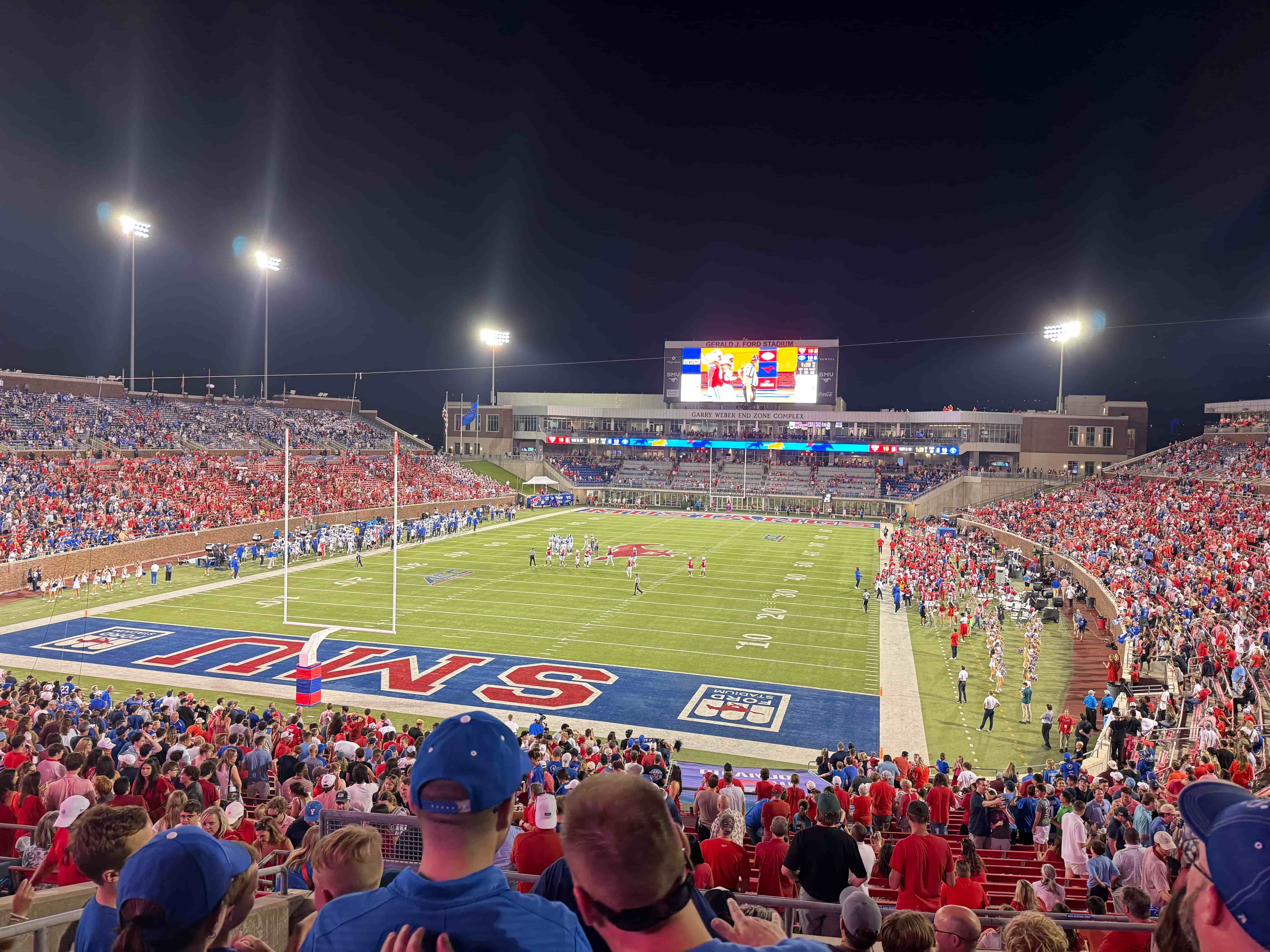
Image Credit: HavanaHeat,CC BY-SA 4.0, via Wikimedia Commons
SMU's Research Infrastructure and Dallas's Knowledge Economy
SMU's research enterprise — organized through the Dedman College of Humanities and Sciences, the Lyle School of Engineering, and the specialized research centers that span the university's academic divisions — contributes to Dallas's knowledge economy through the intellectual property development, sponsored research activity, and graduate student training that research universities provide to their metropolitan regions.
The university's particular strengths in areas including applied mathematics, data science, environmental science, and the humanities give Dallas research capabilities that complement the technology industry's growth in the North Texas corridor and provide the academic infrastructure that technology companies seek when evaluating metropolitan areas for expansion. White Rock Lake reflects the broader Dallas investment in the natural and recreational infrastructure that makes University Park and the surrounding neighborhoods attractive to the faculty, researchers, and students whose presence sustains SMU's academic mission.
SMU's sustained investment in research infrastructure — including the development of the SMU Data Science Institute, partnerships with the Perot Museum of Nature and Science, and the ongoing expansion of laboratory and research facilities on the University Park campus — reflects the university's strategic commitment to maintaining and expanding its research profile in a national academic landscape that increasingly rewards research productivity.
For Dallas residents, Park Cities families, and anyone navigating the educational, cultural, and economic landscape of Dallas, Texas, Southern Methodist University's century-plus impact on the city represents one of the most sustained and most multidimensional institutional contributions to a major American metropolitan area's identity and prosperity.