


White Rock Lake is a 1,254-acre reservoir and public park on the eastern edge of Dallas, Texas — one of the most visited and most beloved outdoor destinations in the city.
Created in 1911 as a municipal water supply reservoir, the lake transitioned to a recreational purpose after the city developed other water sources, and today its surrounding 1,000 acres of park land provide Dallas residents with trails, boating, cycling, wildlife observation, and open green space within minutes of the urban core.
The lake's proximity to established Dallas neighborhoods — including Lakewood, the M Streets, and East Dallas — has made it a defining feature of residential life on Dallas's eastern side for more than a century. Its combination of natural landscape, active recreational programming, and cultural amenities gives White Rock Lake a civic significance that extends well beyond its function as a park, making it one of the most consequential public spaces in North Texas.
The History of White Rock Lake and Its Transformation
White Rock Lake's origins as a water supply reservoir shaped its early history and the infrastructure that still defines its physical character today. The Dallas Water Department completed the dam and impoundment in 1911, creating a reservoir that served as the city's primary drinking water source for several decades before the construction of larger reservoir systems elsewhere in North Texas rendered it obsolete for that purpose.
This transition — from working infrastructure to recreational amenity — reflects the pattern of adaptive reuse that has characterized some of Dallas's most successful public spaces. Fair Park represents the same era of civic investment in Dallas public infrastructure — both White Rock Lake and Fair Park were developed in the early twentieth century as deliberate expressions of municipal ambition and community investment.
The City of Dallas transferred management of the lake and its surrounding land to the parks department in the mid-twentieth century, and the subsequent investment in trails, boat ramps, picnic facilities, and the cultural institutions that now ring the lake transformed it into the recreational anchor it represents today.
The White Rock Lake Conservancy — a nonprofit partner organization that supports the lake's maintenance, programming, and ecological health — documents the lake's history and ongoing stewardship work, reflecting the public-private partnership model that sustains White Rock's facilities and natural resources.
Trails, Cycling, and Active Recreation
White Rock Lake's 9.33-mile perimeter trail is one of the most used recreational paths in Dallas — a paved loop around the lake's shoreline that serves walkers, joggers, cyclists, and inline skaters across a wide range of fitness levels and recreational preferences. The trail's flat profile and consistent surface make it accessible to users who might find hillier or less maintained trail systems challenging, and its scenic lake views sustain interest across the full loop in ways that purely urban trail corridors cannot match.
Weekend mornings bring the trail's heaviest use, when the combination of cooler temperatures and recreational culture that characterizes Dallas's active outdoor community draws thousands of users to the loop.
The White Rock Lake trail connects to the broader Dallas trail network — including the Katy Trail to the west and the Santa Fe Trail system — giving dedicated cyclists and long-distance runners the option to extend White Rock visits into multi-hour urban trail experiences. The City of Dallas Park and Recreation Department maintains the trail and park facilities, publishing current information on conditions, amenities, and programming that helps residents plan their visits throughout the year.
Klyde Warren Park in downtown Dallas represents the city's continued investment in trail-connected public space — together with White Rock Lake, these two parks anchor Dallas's recreational geography on opposite ends of the city's urban trail network.
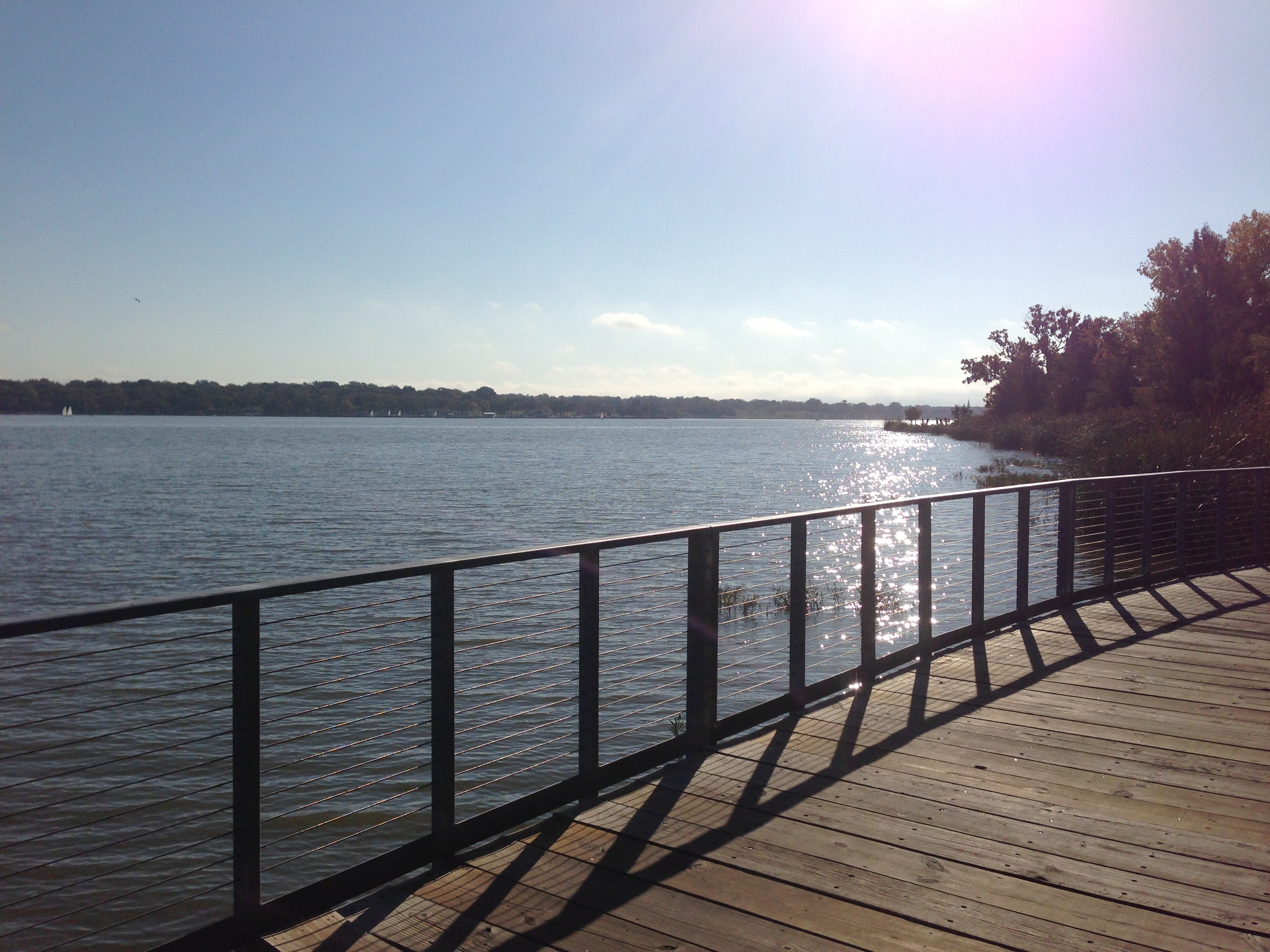
Image Credit: W3stfa11, CC BY-SA 3.0, via Wikimedia Commons
Wildlife, Ecology, and the Lake's Natural Character
White Rock Lake supports a surprisingly diverse wildlife community for an urban reservoir surrounded by one of the most densely developed metropolitan areas in the American South. The lake's shallow margins and the native plant restoration work that the White Rock Lake Conservancy has supported across the shoreline create habitat for great blue herons, egrets, cormorants, pelicans, and the migratory waterfowl that use the lake as a stopover along the Central Flyway — the major north-south bird migration corridor that passes through Texas each spring and fall.
The ecological health of White Rock Lake requires sustained management attention given the runoff inputs from the surrounding urban watershed and the recreational pressure that heavy use imposes on the shoreline habitat.
According to NOAA climate data for Dallas, the city averages approximately 37 inches of annual precipitation — enough to generate significant stormwater runoff from the impervious surfaces of the surrounding neighborhoods that flows into the lake and affects water quality, sediment levels, and the ecological balance that wildlife habitat requires.
The Bath House Cultural Center and Lakeside Arts
The Bath House Cultural Center — a 1930s-era building on the lake's eastern shore originally constructed as a public bathing facility — has been repurposed as one of Dallas's most distinctive community arts venues, housing gallery exhibitions, theater productions, and cultural programming that draws East Dallas residents and citywide arts audiences to the lakeside setting year-round.
The building's WPA-era architecture — constructed during the Works Progress Administration's Depression-era investment in public facilities — gives it a historic character that connects the cultural programming it now houses to the civic investment tradition that created White Rock Lake's public infrastructure in the first place.
The Bath House's programming calendar operates year-round, making it an indoor cultural destination that supplements the outdoor recreational amenity of the surrounding park. The combination of the Bath House, the nearby Dallas Arboretum and Botanical Garden on the lake's southern shore, and the active recreational culture of the trail system gives White Rock Lake a completeness as a public destination that few Dallas parks can match — serving visitors who want vigorous outdoor exercise alongside those seeking cultural enrichment or quiet natural observation in the same geographic location.

Image Credit: Marcia Cirillo, CC BY-SA 2.0 via Wikimedia Commons
White Rock Lake's Role in Dallas Residential Life
White Rock Lake's influence on the residential neighborhoods surrounding it extends well beyond providing a recreation destination — it shapes property values, community identity, and the quality of daily life for the thousands of Dallas households within walking or cycling distance of its shores.
The residential vitality that White Rock Lake anchors on Dallas's eastern side mirrors the same pattern visible in Uptown Dallas to the northwest — both neighborhoods demonstrate how proximity to quality public amenity sustains residential desirability and property values across multiple real estate cycles.
Those exploring the neighborhoods, history, and quality of life that define Dallas Texas will find White Rock Lake at the center of what makes the city's eastern residential communities among its most enduringly desirable.